
How to Compare Mutual Funds
Learning how to compare mutual funds means checking the same categories for every fund: its investment objective, strategy, holdings, fees, share class, historical performance, and risks. This checklist explains where to find that information and how to organize it without relying on a fund name or a single return figure.
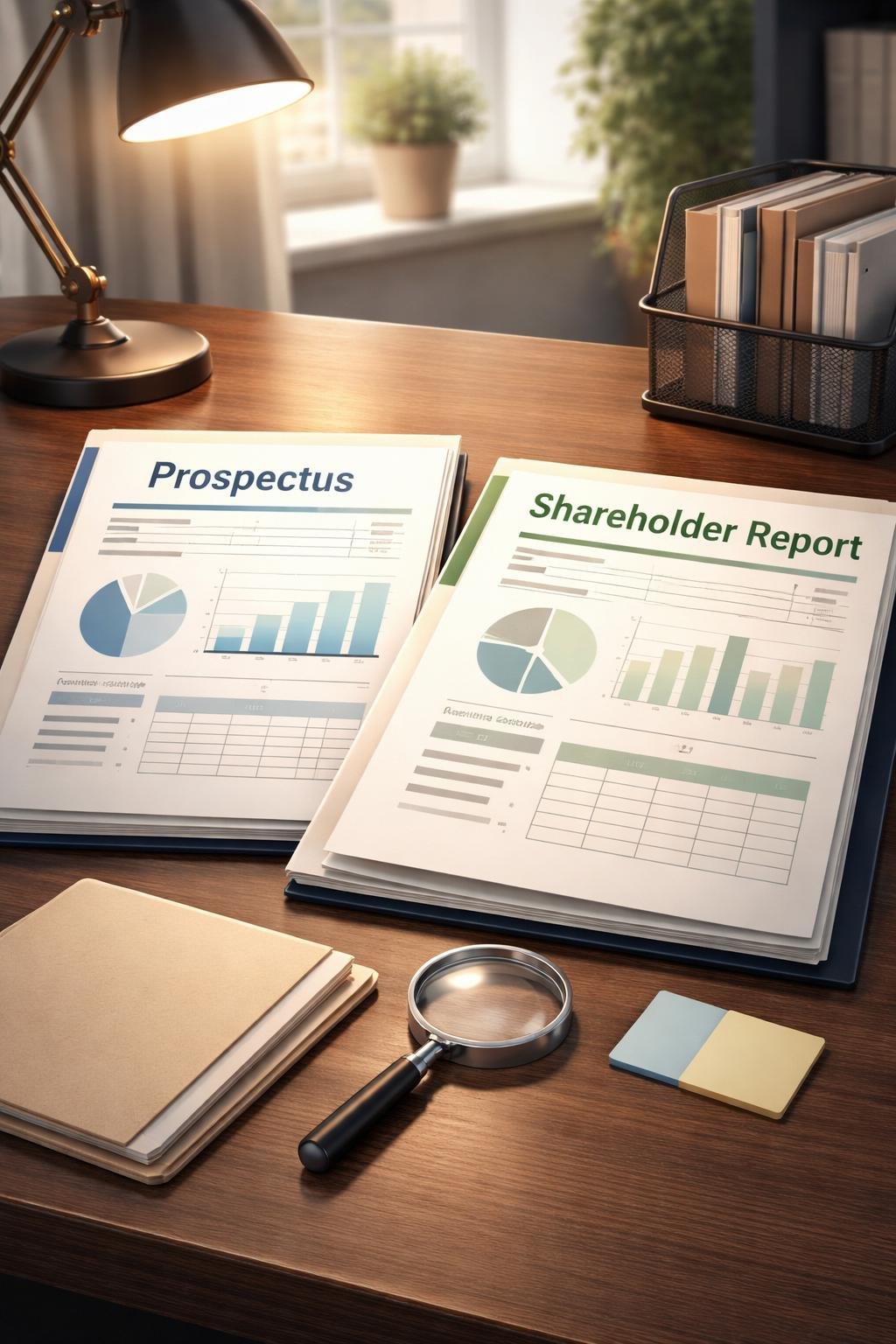
The main documents are the fund’s current prospectus and latest shareholder report. Read the documents for the exact share class you are considering, and verify material details through current official sources.
What a Mutual Fund Comparison Involves
A mutual fund pools money from investors and invests it according to a stated objective and strategy. Comparing funds involves examining how each fund operates, what it owns, what it costs, how it has performed during stated periods, and what risks it presents.
A fund name alone does not provide enough information. Two funds with similar names may follow different strategies, hold different investments, charge different fees, or expose investors to different risks.
The prospectus is a key comparison document. Mutual fund prospectuses use a standardized format intended to help investors compare information such as objectives, fees, investments, risks, performance, management, purchase and sale details, taxes, and intermediary compensation. The latest shareholder report can provide additional information about the fund and its investments.
Why Comparing Mutual Funds Matters

Funds that appear similar may pursue different objectives or use different methods to pursue them. Their investments, risk exposures, operating expenses, sales charges, and other costs may also differ.
Fees matter because they reduce the return retained by an investor. A fund with higher costs has a greater performance handicap than an otherwise similar lower-cost fund, but cost is only one part of a complete comparison.
Share classes require special attention. Different classes may own the same underlying securities while charging different sales loads and operating expenses. Those cost differences can lead to different reported returns.
Historical performance provides information about what happened during a stated past period. It does not establish or predict what the fund will earn in the future.
What to Gather Before You Compare Funds
- The exact fund name and share class: Record both so that you do not mix information from different classes.
- The current prospectus for each fund: Use the prospectus to review objectives, strategy, fees, risks, performance, and share-class information.
- The latest shareholder report: Use it alongside the prospectus when reviewing fund information and disclosed investments.
- Matching reporting periods: When comparing holdings or performance, check the dates and use the same periods where the period is material.
- Your purpose for investing: Note the objective you are trying to address, your time horizon, and your tolerance for possible losses and changing values.
- A comparison worksheet: Create one column for each fund and one row for every comparison category.
Fees, holdings, documents, and other details can change. Check current official fund documents before relying on any material information.
Step-by-Step Mutual Fund Comparison Checklist
Use the same sequence for every fund. Starting with the investment objective prevents a low fee or a recent return from distracting you from what the fund is designed to do.
- Read the investment objective and principal investment strategy.
- Review the disclosed holdings and their reporting date.
- Record the expense ratio and every other disclosed cost.
- Verify the exact share class.
- Compare historical performance over matching periods.
- Read the principal-risk disclosures.
- Place the findings side by side and assess them together.
Record information directly from the relevant documents rather than relying on memory or comparing one fund in greater detail than another.
Step 1: Compare the Investment Objective and Strategy
The investment objective states what the fund is trying to achieve. The principal investment strategy explains the main approach management intends to use in pursuing that objective.
Locate both items in each prospectus. Record the wording or a careful summary in your worksheet, then ask whether the funds are attempting to achieve the same type of result and whether they use similar methods.
Do not treat the stated objective as a promise. It describes the fund’s aim, while the strategy describes the intended approach; neither predicts that the fund will succeed.
Step 2: Review the Fund’s Holdings
Holdings are the investments owned by a fund as disclosed for a particular reporting period. Review the available holdings information to see what each fund actually owned rather than assuming that similarly named funds held the same assets.
Compare the types of investments shown and consider how they relate to the strategy described in the prospectus. This helps identify whether two funds with similar labels obtain their exposure in similar or different ways.
Always record the date or reporting period attached to the holdings. Holdings may change, so information from different dates may not provide a like-for-like comparison.
Step 3: Compare Fees and Expenses
Begin with the standardized fee table in each prospectus. Use the table for the exact share class being reviewed.
The expense ratio is the percentage of fund assets used for recurring annual expenses. Depending on the fund’s disclosures, those operating expenses can include management fees, 12b-1 fees, and other expenses. A 12b-1 fee is a disclosed fund operating expense associated with distribution or shareholder services.
Record all disclosed costs, including:
- Management fees.
- 12b-1 fees.
- Other operating expenses included in the expense ratio.
- Sales loads, which are sales charges.
- Redemption fees associated with certain redemptions.
- Exchange fees associated with certain fund exchanges.
- Account fees.
- Any other costs identified in the disclosure documents.
The expense ratio does not include sales loads or transaction fees. This means that comparing expense ratios alone can miss costs that may apply to a particular purchase, account, exchange, or redemption.
A fund also incurs transaction costs when its portfolio buys and sells investments. These costs are deducted before returns are calculated. Higher portfolio turnover may increase transaction costs, so review turnover-related information in context rather than treating the expense ratio as the complete cost figure.
Step 4: Check the Share Class
A mutual fund may offer multiple share classes. The classes may own the same underlying securities but charge different sales loads and operating expenses. As a result, their returns can differ even though the underlying portfolio is the same.
Write down the exact class identifier for every fund. Then verify that the prospectus, fee table, expense ratio, sales-charge information, and performance results all belong to that class.
Do not combine a fee figure from one class with a performance figure from another. That would create an inconsistent comparison.
Step 5: Compare Performance Carefully
Compare reported historical performance only when the figures cover matching periods and relate to the correct share class. Record the beginning and ending periods shown in the source document so that unlike periods are not placed beside one another as if they were equivalent.
Interpret each return using the fund’s disclosures about costs. Fund transaction costs are deducted before returns are calculated, and differences in share-class expenses can contribute to different results. Fees create a performance handicap because they reduce the return retained by investors.
Performance should be considered with the fund’s objective, strategy, holdings, costs, and risks. Past performance is historical information, not proof or a prediction of future returns.
Step 6: Compare Risks
Read the principal-risk disclosures in each prospectus. These disclosures describe risks associated with the fund’s strategy and investments.
Connect each disclosed risk to the information reviewed earlier. For example, ask how the stated strategy and types of holdings relate to the risks listed in the prospectus. Use the fund’s own disclosure rather than assuming that all funds in a broad category have identical risks.
Do not consider a return figure without considering the risks associated with producing that result. All investing involves risk, including the possible loss of principal.
Step 7: Put the Information Side by Side

A simple worksheet makes gaps and inconsistencies easier to notice. Use the same rows for every fund.
| Comparison item | Fund or class A | Fund or class B |
|---|---|---|
| Exact fund and share class | Record from official documents | Record from official documents |
| Investment objective | Summarize the stated objective | Summarize the stated objective |
| Principal strategy | Record the main approach | Record the main approach |
| Holdings and reporting date | Record both | Record both |
| Expense ratio | Record for the exact class | Record for the exact class |
| Other disclosed costs | List separately | List separately |
| Performance period | Use a matching period | Use a matching period |
| Principal risks | Summarize the disclosures | Summarize the disclosures |
FINRA’s Fund Analyzer can compare expenses across funds or share classes and estimate their impact over time. It can support a cost comparison, but official fund documents remain important for verifying the exact class, strategy, fees, performance information, and risks.
Important Cautions When Comparing Mutual Funds
- Information can change: Holdings, fees, and other fund details may change. Verify material information in current official documents.
- Reporting dates matter: Holdings or performance figures from different periods may not be directly comparable.
- Share classes are not interchangeable: Classes may have different sales loads, operating expenses, and returns even when they own the same underlying securities.
- The expense ratio is not the full cost picture: It excludes sales loads and transaction fees. Other disclosed account, exchange, or redemption costs may also be relevant.
- Portfolio trading has costs: Transaction costs are deducted before returns are calculated, and higher turnover may increase them.
- Past results are limited: Historical performance cannot guarantee future results.
When a decision depends on a current fee, holding, document, rule, or platform detail, confirm it through the relevant official source.
Common Mutual Fund Comparison Mistakes

- Choosing by recent performance alone: Review objectives, strategy, holdings, costs, and risks before interpreting performance.
- Comparing different share classes: Confirm the exact class attached to every fee and return figure.
- Looking only at the expense ratio: Check for sales loads, transaction costs, redemption fees, exchange fees, account fees, and other disclosed costs.
- Ignoring strategy and risk disclosures: Read how the fund intends to pursue its objective and which principal risks accompany that approach.
- Comparing unlike periods: Match performance periods and note the dates attached to holdings.
- Assuming similar names mean similar holdings: Inspect each fund’s disclosed investments and reporting period.
- Using outdated documents: Obtain the current prospectus and latest shareholder report before completing the comparison.
A consistent worksheet helps prevent these errors by requiring the same information for every fund.
Frequently Asked Questions
Where can I find a mutual fund’s fees?
Start with the standardized fee table in the fund’s prospectus. Check that the table belongs to the exact share class you are reviewing. Also read the related disclosures for sales loads, redemption fees, exchange fees, account fees, and other costs.
Does the lowest expense ratio settle the comparison?
No. The expense ratio is an important recurring cost measure, but it does not show sales loads or transaction fees. A complete comparison also considers the objective, strategy, holdings, share class, other disclosed costs, performance periods, and risks.
Why can share-class returns differ?
Multiple share classes may own the same underlying securities while charging different sales loads and operating expenses. Those cost differences can produce different returns.
Which documents should I use?
Use each fund’s current prospectus and latest shareholder report. Confirm that the documents and figures correspond to the exact fund and share class being compared.
Why do holdings dates matter?
Holdings are disclosed for a stated reporting period and may change. Comparing holdings from different dates can create an uneven comparison, so record the relevant date for each set of holdings.
Can FINRA’s Fund Analyzer replace the prospectus?
No. The analyzer can compare expenses across funds or share classes and estimate their impact over time. Official fund documents remain necessary for verifying the fund’s objective, strategy, investments, exact share class, disclosures, and risks.
Key Takeaway

Begin by verifying the exact fund and share class. Use the current prospectus and latest shareholder report, compare investment objectives and strategies, inspect holdings and their reporting dates, and account for all disclosed costs rather than relying only on the expense ratio.
Next, compare historical performance over matching periods and read the associated risk disclosures. No single figure provides a complete mutual fund comparison, and past performance does not predict future results.
References
- Mutual Fund Prospectus | Investor.gov — https://www.investor.gov/introduction-investing/investing-basics/glossary/mutual-fund-prospectus
- Mutual Funds and Fees: What You Should Know | Syndication — https://syndication.finra.org/content/mutual-funds-and-fees-what-you-should-know
- Mutual Fund and ETF Fees and Expenses – Investor Bulletin | Investor.gov — https://www.investor.gov/introduction-investing/general-resources/news-alerts/alerts-bulletins/investor-bulletins/mutual-fund-and-etf-fees-and-expenses-investor-bulletin
Disclaimer
This article is provided for general educational and informational purposes only. It is not investment, financial, legal, or tax advice, and it is not a recommendation or solicitation to buy, sell, hold, or avoid any security or financial product. Financial information, company information, market conditions, fees, rules, regulations, and platform details can change. Investing involves risk, including the possible loss of principal. Verify important current information through relevant official sources and consider your own circumstances, objectives, and risk tolerance before making financial decisions.
Image Notice: Images may be AI-generated educational illustrations provided for visual explanation only and should not be interpreted as exact representations of real companies, people, products, documents, financial data, or investment outcomes.