
Introduction
Learning how to transfer a brokerage account starts with contacting the brokerage firm that will receive the account. That new firm generally initiates the transfer and coordinates with the brokerage currently holding your investments.
This guide explains what a brokerage account transfer is, what to check before starting, how the process works, and how to confirm that your investments and cash arrived correctly.
What a Brokerage Account Transfer Is
A brokerage account transfer moves eligible investments and cash from one brokerage firm to another. The firm currently holding the account is the old or delivering firm. The brokerage receiving the account is the new or receiving firm.
Most brokerage account transfers use the Automated Customer Account Transfer Service, commonly called ACATS. This system standardizes and automates the movement of customer accounts and assets between participating financial firms.
ACATS supports broad categories of assets, including cash, stocks, corporate and municipal bonds, government securities, mutual funds, unit investment trusts, listed options, annuities, and certain alternative investments. Support within the system does not mean that every asset can be transferred to every brokerage. The receiving firm must be able and willing to hold each asset.
Why You Might Transfer a Brokerage Account

You might consider a transfer if you decide that another brokerage better fits your needs. Your reasons could involve the services available, the types of assets accepted, account access, costs, or other features. Current details should be confirmed directly with each firm before making a decision.
A transfer may also come up when an individual broker leaves one firm for another. You do not necessarily have to follow that broker. You may keep your assets at the current brokerage and work with a newly assigned or different broker, or you may choose to move the account.
If a broker asks you to transfer assets after moving to another firm, consider possible transfer costs and conflicts of interest. Review the educational information provided by the new firm and make your own decision based on your circumstances.
What to Check Before Starting a Transfer

Prepare before submitting a transfer request. Missing information or an unsupported holding can delay the process.
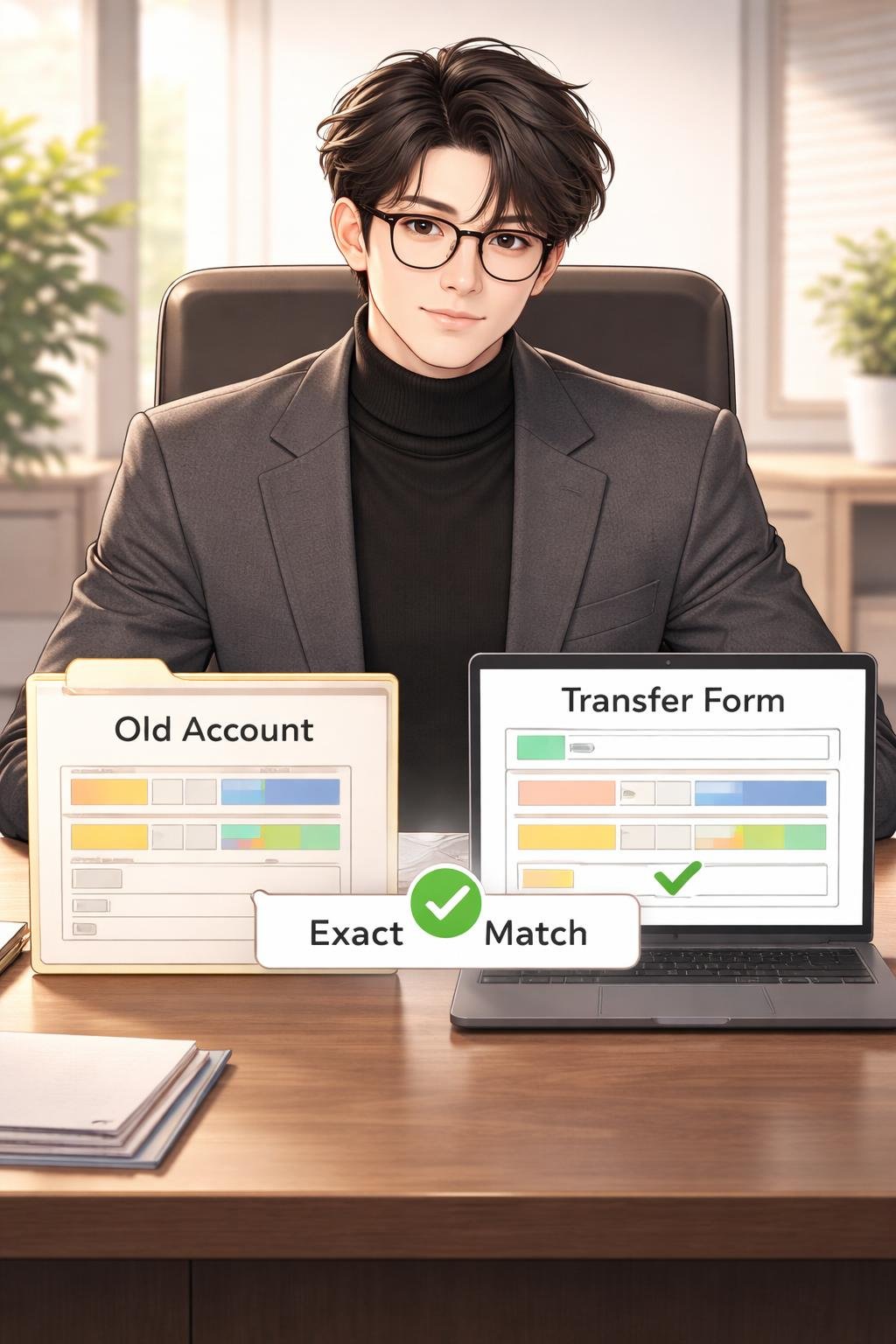
- Old-account information: Have the information shown on your existing brokerage account available. The details entered on the transfer form should match the old account exactly.
- Receiving account: Confirm that the new brokerage can open the appropriate account and accept the transfer.
- Asset eligibility: Ask the receiving firm whether it can hold every investment in the old account.
- Fees: Ask both firms whether transfer or related fees may apply. Do not assume that current fees are the same at every brokerage.
- Restrictions: Ask whether either firm has requirements that could affect the request.
- Possible delays: Find out how the firms handle assets that cannot move through the standard process.
Examples of holdings that may not transfer include proprietary securities, funds that the receiving brokerage does not support, private limited partnerships, fractional shares, and bankrupt securities. These are examples rather than a complete eligibility list. Confirm the current status of every holding with both firms.
How to Transfer a Brokerage Account Step by Step
- Choose and contact the receiving firm. Start with the brokerage that will receive the account. Ask how to open the appropriate receiving account and begin its transfer process.
- Confirm that the account and assets can be accepted. Give the receiving firm enough information to identify the types of investments involved. Ask about unsupported holdings, restrictions, possible fees, and likely delays before submitting the request.
- Obtain the Transfer Instruction Form. The receiving firm provides the form or its equivalent process. This document tells the new firm which account and assets you want transferred.
- Complete the form carefully. Enter the account information exactly as it appears on the old brokerage account. Check the completed form for mismatched or missing details.
- Submit the request to the receiving firm. Do not begin by sending the form to the old brokerage unless the receiving firm specifically directs you to do so.
- Allow the firms to coordinate. For an ACATS transfer, the receiving firm sends the request and asset information to the old firm through the transfer system.
- Stay in contact with both firms. Monitor messages and the status of the transfer. Respond promptly if either firm asks for clarification or additional information.
- Resolve problems promptly. If a holding cannot be accepted or the account details do not match, ask both firms what action is required. Do not guess about how a rejected asset will be handled.
- Verify the completed transfer. Compare the old firm’s final account statement with the new firm’s first account statement. Check that the expected assets and cash appear correctly, and contact the firms promptly if anything is missing or incorrect.
Transfer Timing, Restrictions, and Other Important Cautions
Most uncomplicated ACATS transfers take about three to five business days. That general timeframe does not guarantee when a particular transfer will finish. Incorrect information, account restrictions, unresolved requests, or ineligible assets can cause delays.
Trading while a transfer is underway may also delay the process. Ask both firms how account activity could affect a pending request before placing transactions or making other changes.
Some holdings cannot be moved through ACATS or cannot be accepted by the receiving brokerage. Ask what will happen to each unsupported asset before authorizing the transfer.
Fees may apply. Because brokerage charges and policies can change, obtain current fee information directly from both firms.
ACATS is a non-guaranteed service. It standardizes and automates the transfer process, but it does not guarantee completion or eliminate every operational risk. Current timing, restrictions, asset eligibility, and procedures should always be confirmed with the brokerages involved.
Common Brokerage Transfer Mistakes to Avoid

- Entering information that does not match the old account: Copy the account information carefully and review it before submission.
- Failing to check asset eligibility: Ask the receiving brokerage to confirm whether it can accept each type of holding.
- Overlooking fees or restrictions: Request current information from both firms before beginning.
- Trading during the transfer: Account activity may delay the process, so ask the firms how pending activity will be treated.
- Ignoring requests from either firm: Monitor communications and respond promptly when more information is needed.
- Assuming completion means everything is correct: Compare the old firm’s final statement with the new firm’s first statement and report discrepancies promptly.
Careful preparation and timely communication can help you identify problems before they remain unresolved.
Frequently Asked Questions
Who starts a brokerage account transfer?
The customer generally starts the process by submitting an accurate Transfer Instruction Form to the receiving brokerage. The receiving firm then coordinates with the old firm.
How does ACATS work?
ACATS is a standardized system that participating financial firms use to process transfers of customer accounts and eligible assets. The receiving firm sends the request and asset list to the old firm through the system.
How long does an uncomplicated transfer usually take?
Most uncomplicated ACATS transfers take about three to five business days. Problems, restrictions, unsupported holdings, or inaccurate account information may extend the process.
What types of assets are generally supported?
ACATS supports broad categories such as cash, stocks, bonds, government securities, mutual funds, unit investment trusts, listed options, annuities, and certain alternative investments. Eligibility still depends on the asset and the receiving firm’s ability to hold it.
Why might a holding not transfer?
A holding may be proprietary to the old firm, unsupported by the receiving firm, fractional, bankrupt, privately structured, or otherwise ineligible for the standard process. Ask both firms about the specific reason and available next steps.
Can a brokerage charge a transfer fee?
Fees may apply. Ask both the old and new firms for their current fee information because charges and policies can change.
What should I do if the transfer is delayed?
Contact both firms, ask what issue is preventing completion, and respond promptly to requests for information. Confirm whether the delay involves an account mismatch, a restriction, trading activity, or an unsupported asset.
How do I confirm that the transfer was completed correctly?
Compare the old firm’s final account statement with the new firm’s first statement. Check the listed investments and cash, then contact the firms promptly if an expected item is missing or incorrect.
Key Takeaway

Before transferring a brokerage account, confirm that the receiving firm can accept the account and its assets, and ask both firms about current costs and restrictions. Provide the new firm with information that exactly matches the old account, avoid activity that could disrupt the process, and respond promptly to communications. After completion, compare the old firm’s final statement with the new firm’s first statement to confirm that the expected assets and cash transferred correctly.
References
- Automated Customer Account Transfer Service (ACATS) | DTCC — https://www.dtcc.com/products-and-services/clearing-settlement-services/equities-clearing/acats
- Transferring Your Brokerage Account | Investor.gov — https://www.investor.gov/introduction-investing/investing-basics/glossary/transferring-your-brokerage-account
- Investor Bulletin: Transferring Your Investment Account | Investor.gov — https://www.investor.gov/introduction-investing/general-resources/news-alerts/alerts-bulletins/investor-bulletins-79
- What to Expect When Your Broker Leaves | Syndication — https://syndication.finra.org/content/what-expect-when-your-broker-leaves
Disclaimer
This article is provided for general educational and informational purposes only and is not investment, financial, legal, or tax advice. It is not a recommendation or solicitation to buy, sell, hold, or avoid any security or financial product. Financial information, company information, market conditions, fees, rules, regulations, and platform details can change. Investing involves risk, including the possible loss of principal. Verify important current information using relevant official sources and consider your circumstances, objectives, and risk tolerance before making financial decisions.
Image Notice: Images may be AI-generated educational illustrations provided for visual explanation only and should not be interpreted as exact representations of real companies, people, products, documents, financial data, or investment outcomes.