
Introduction
Learning how to read a mutual fund prospectus means knowing where to find the document, which sections to review, and how to compare the same information across funds. This guide explains a practical process for checking a fund’s objectives, strategies, risks, performance history, management, costs, and shareholder procedures.
A prospectus contains important information, but it does not decide whether a fund is appropriate for you. Your task is to verify the exact fund, read its disclosures carefully, investigate anything unclear, and consider the information in light of your own circumstances.
What Is a Mutual Fund Prospectus?
A mutual fund prospectus is a disclosure document that explains how a fund operates. Investors should request and read it before investing because it provides standardized information that can be used to understand and compare funds.
A fund may provide a shorter summary prospectus or a longer statutory prospectus. The summary prospectus presents key information in a more compact format. The statutory prospectus contains additional detail, including financial highlights.
Key information generally appears in a consistent order. It covers the fund’s investment objectives, fees, investments, risks, performance, management, share purchase and sale procedures, tax information, and compensation paid to financial intermediaries.
Why Reading the Prospectus Matters

The prospectus helps you understand what a fund is trying to accomplish and how its managers intend to pursue that objective. It also identifies principal risks that could affect an investor’s results.
Reading the same categories across several prospectuses can make comparisons more consistent. You can compare objectives, strategies, risks, fees, historical performance, management, and shareholder information instead of focusing on a single headline figure.
Costs deserve particular attention because fund fees reduce net asset value and returns. A fund with strong historical results may also perform differently in the future, so past performance should not be treated as a prediction.
What to Gather Before You Start

First, confirm the exact name of the mutual fund and the share class you are researching. Do not assume that documents with similar fund names or different share-class identifiers describe the same investment option.
Obtain the current prospectus from the fund company, the SEC website, a broker, an investment adviser, or another financial professional. Check the document’s identifying information before relying on it.
Gather the latest shareholder report and the fund’s Statement of Additional Information when they are available. The Statement of Additional Information is commonly referred to as the SAI. These supporting documents can provide further information when the prospectus does not answer all of your questions.
Before comparing funds, write down what you are trying to evaluate. Relevant personal considerations may include your objectives, financial circumstances, expected time horizon, and tolerance for investment risk. This preparation does not determine which fund you should choose, but it helps you identify which disclosures require the closest attention.
How to Read a Mutual Fund Prospectus Step by Step

1. Identify the investment objective
Start with the fund’s investment objective. This explains what the fund is designed to pursue. Use the stated objective to determine whether you understand the fund’s basic purpose before examining performance or other details.
When comparing funds, note whether their stated objectives are actually similar. Performance comparisons are less useful when the funds are pursuing materially different objectives.
2. Review the principal investment strategies
Next, read how the fund intends to pursue its objective. The strategy section explains where and how the fund expects to invest and how its portfolio is managed.
Look for the main types of investments and management approach described in the document. When comparing funds, ask whether similar objectives are being pursued through similar or different strategies.
3. Examine the principal risks
The risk section describes the principal ways an investor could experience unfavorable results. Read each risk in connection with the strategy that creates or increases that exposure.
Do not treat risk disclosures as routine language to skip. Compare which risks appear across funds, how prominently they are discussed, and whether you understand how they relate to each fund’s investments.
4. Study historical performance carefully
The performance section shows reported historical results. It can help you examine how a fund performed during the periods presented, but it does not predict future returns.
Use performance as one part of the review rather than as the deciding factor. Confirm the fund and share class represented by the figures, and consider the performance information together with the fund’s strategy, risks, and costs.
5. Review fund management
The management section identifies how the fund is managed. Review this section to understand who is responsible for overseeing or carrying out the investment approach described in the prospectus.
For comparisons, check whether each prospectus provides enough information for you to understand the management arrangement. Consult supporting documents if you need further detail.
6. Analyze the fee table and other charges
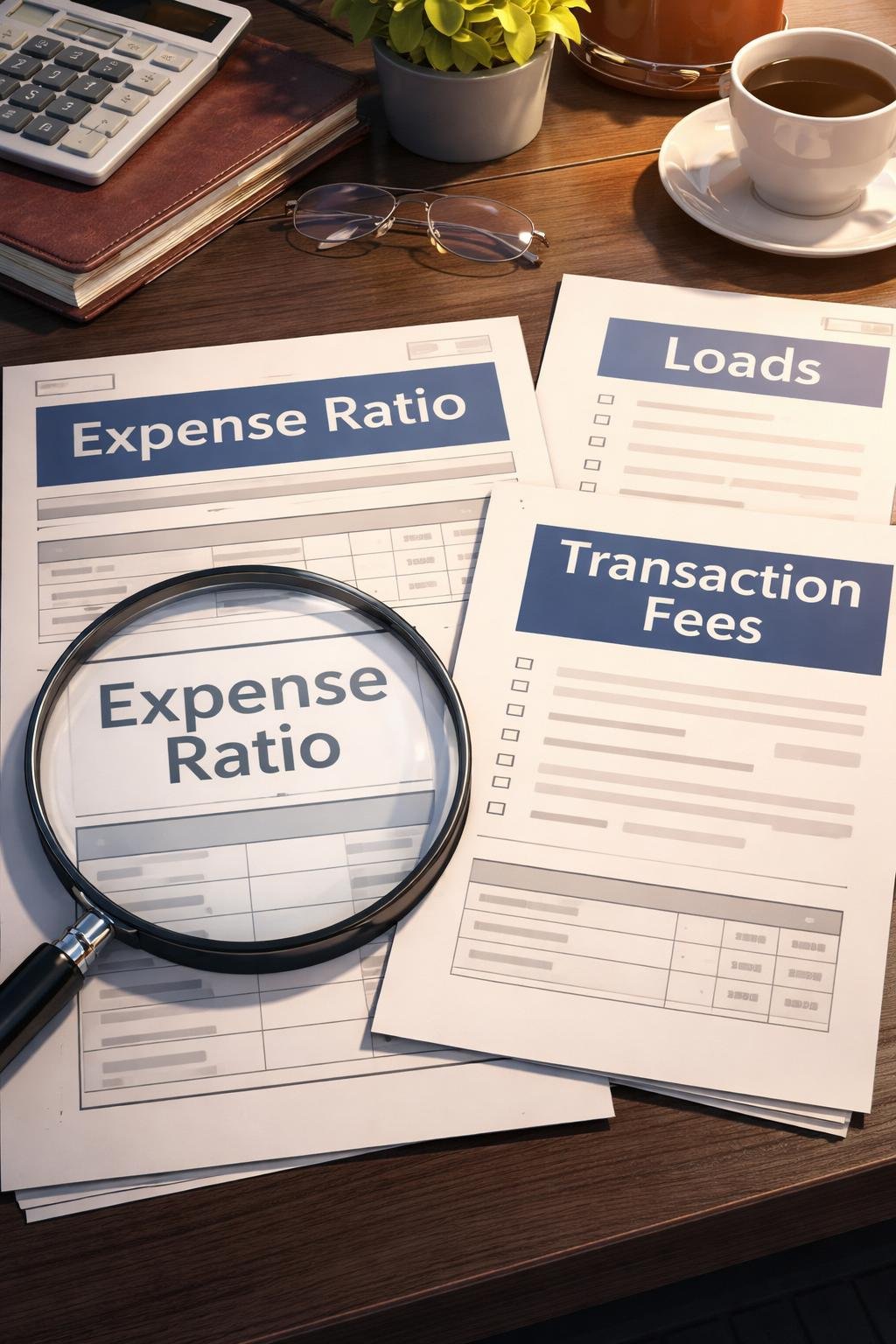
Read the fee table closely. The Total Annual Fund Operating Expenses figure, also called the expense ratio, expresses recurring annual fund operating expenses as a percentage of fund assets.
The expense ratio does not include every possible cost. It does not include loads or transaction fees. A load is a sales charge, while a transaction fee is a separate charge connected with a transaction. The prospectus may also describe charges that apply only in particular situations.
When comparing funds, separate recurring operating expenses from loads, transaction fees, and situation-based charges. Do not compare only one cost figure if other charges may apply.
7. Check purchase and sale procedures
Review the shareholder information explaining how fund shares may be purchased and sold. This section can help you understand the procedures that apply before you attempt a transaction.
Compare the instructions and conditions in the relevant documents, especially when researching more than one fund or share class. Verify current procedures through the fund or the relevant financial professional if any instruction is unclear.
8. Review the tax information
Read the prospectus section addressing taxes so you know what tax topics the fund identifies for investors. Do not assume that general disclosure answers questions about your personal tax circumstances.
Tax rules and individual situations can differ and can change. Verify important current information through appropriate official sources and consider obtaining qualified help when personal tax guidance is needed.
9. Note intermediary compensation
The prospectus includes information about compensation involving brokers, advisers, or other financial intermediaries. Read this section to identify payments that could be relevant to how the fund is presented or sold.
Compensation arrangements may be important when evaluating possible conflicts. If the disclosure is unclear, ask the intermediary to explain the arrangement rather than making assumptions about its effect.
10. Use supporting documents for further detail
If the summary prospectus does not provide enough detail, review the statutory prospectus. Also consult the latest shareholder report and the Statement of Additional Information when available.
Keep notes in a consistent format while comparing funds. Record the objective, strategy, principal risks, historical performance, management, operating expenses, other charges, shareholder procedures, tax disclosures, and intermediary compensation for each fund.
Important Cautions When Interpreting a Prospectus
A prospectus provides disclosures; it does not remove investment risk. Investing can result in loss of principal, and no disclosure document can guarantee a particular outcome.
Fees reduce a fund’s net asset value and returns. The expense ratio is important, but it does not include loads or transaction fees. Review the complete fee disclosure to understand which recurring and situation-based costs may apply.
Past performance does not predict future returns. Historical figures describe reported results for the periods presented, not what an investor will necessarily earn later.
Documents, fees, procedures, rules, and other terms can change. Make sure you are reading the relevant current document and verify material details through the fund, the SEC website, or another appropriate official source.
Ask questions when a term, risk, charge, or procedure is unclear. Do not convert an unclear disclosure into an assumption.
Common Prospectus-Reading Mistakes
- Focusing only on past returns: Treat performance as historical information and review it alongside objectives, strategies, risks, and costs.
- Skipping risk disclosures: Read the principal risks and connect them to the investments and methods described in the strategy section.
- Treating the expense ratio as the total of every possible cost: Check separately for loads, transaction fees, and charges that apply in particular situations.
- Overlooking the exact fund or share class: Match the document and performance information to the precise fund and share-class identifier you are researching.
- Ignoring purchase and sale procedures: Review the shareholder instructions before attempting a transaction.
- Using an outdated document: Check that the prospectus is current and verify material information through an appropriate official source.
- Stopping after the summary prospectus: Use the statutory prospectus, latest shareholder report, or Statement of Additional Information when you need more detail.
- Guessing about unclear language: Ask the fund, broker, adviser, or other relevant financial professional to explain information you do not understand.
Frequently Asked Questions
Where can I find a mutual fund prospectus?
You can obtain a prospectus from the fund company, the SEC website, a broker, an investment adviser, or another financial professional. Confirm that it covers the exact fund and share class you intend to research.
Is a summary prospectus enough for an initial review?
A summary prospectus can be a useful starting point because it presents key information in a shorter format. Consult the statutory prospectus and supporting documents when you need additional detail.
How does a prospectus differ from a shareholder report or Statement of Additional Information?
The prospectus provides key disclosures about the fund’s objectives, fees, strategies, risks, performance, management, and shareholder information. The latest shareholder report and Statement of Additional Information are supporting documents that can provide further information for a more complete review.
What does an expense ratio cover?
The expense ratio, identified as Total Annual Fund Operating Expenses, shows the percentage of fund assets used for recurring annual fund operating expenses. It does not include loads or transaction fees.
Does strong historical performance indicate future returns?
No. Historical performance reports what occurred during past periods, but it does not predict future returns. Review performance together with the fund’s objective, strategy, risks, fees, and other disclosures.
Key Takeaways

- Verify the exact fund, share class, and current prospectus before beginning your review.
- Read the investment objective and principal strategy to understand what the fund is trying to accomplish and how it intends to do so.
- Examine the principal risks and consider them in connection with the fund’s strategy.
- Treat performance as historical information rather than a forecast of future returns.
- Review management, the expense ratio, loads, transaction fees, and situation-based charges.
- Check purchase and sale procedures, tax information, and intermediary compensation.
- Use the statutory prospectus, latest shareholder report, and Statement of Additional Information when further detail is needed.
- Compare funds using the same categories and verify important current details through relevant official sources before making an independent decision.
References
- Mutual Fund Prospectus | Investor.gov: https://www.investor.gov/introduction-investing/investing-basics/glossary/mutual-fund-prospectus
- Mutual Funds | Investor.gov: https://www.investor.gov/introduction-investing/investing-basics/investment-products/mutual-funds-and-exchange-traded-funds-etfs/mutual-funds
- Mutual Funds and Fees: What You Should Know | Syndication: https://syndication.finra.org/content/mutual-funds-and-fees-what-you-should-know
Disclaimer
This article is provided for general educational and informational purposes only. It is not investment, financial, legal, or tax advice, and it is not a recommendation or solicitation to buy, sell, hold, or avoid any security or financial product. Financial information, company information, market conditions, fees, rules, regulations, and platform details can change. Investing involves risk, including the possible loss of principal. Verify important current information through relevant official sources and consider your own circumstances, objectives, and risk tolerance before making financial decisions.
Image Notice: Images may be AI-generated educational illustrations provided for visual explanation only and should not be interpreted as exact representations of real companies, people, products, documents, financial data, or investment outcomes.